Wednesday, April 04, 2007

Sofie and Eryn


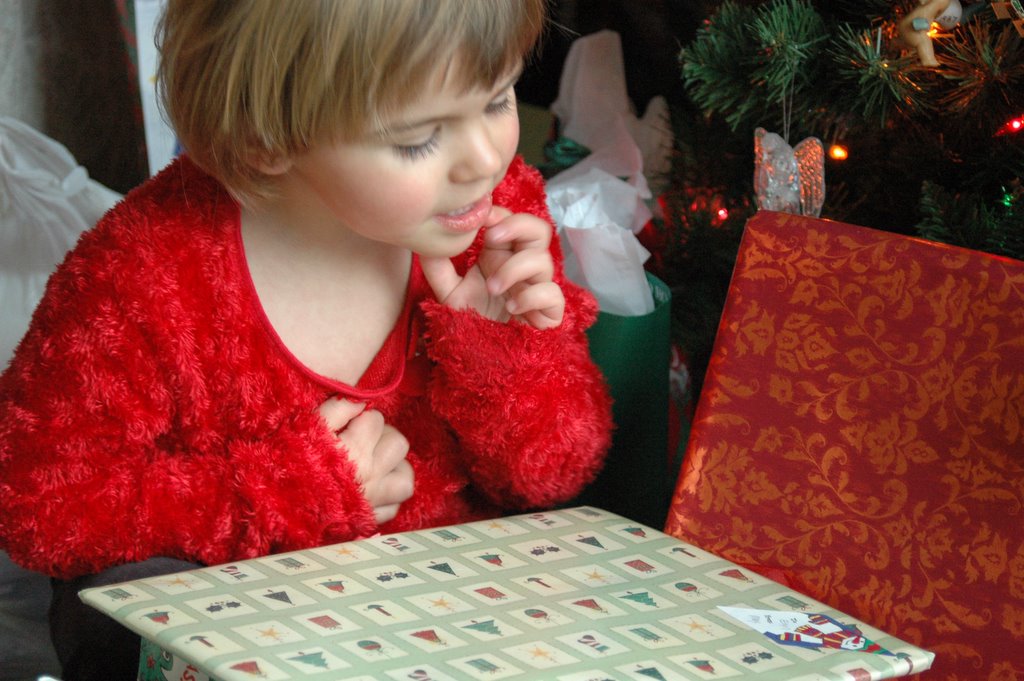
The cousins, Eryn and Sofie at Michael's hot dog place in Highland Park, IL


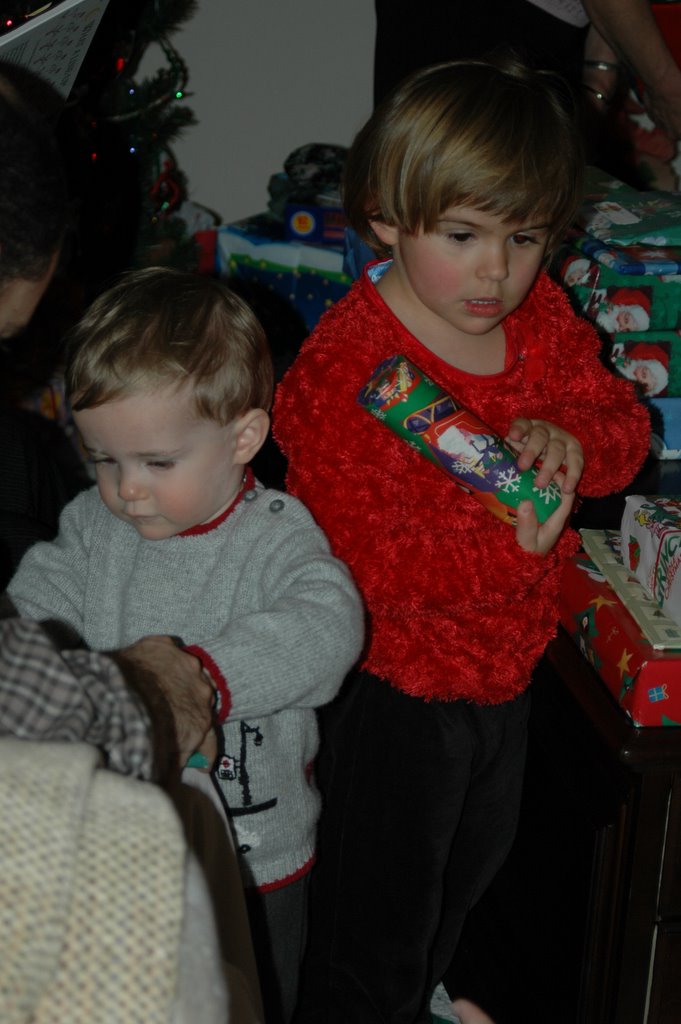
Eryn with her handful of dumb dumbs from Max's party


Sofie in the rocker her mom had as a child with the new seat and back that Geri made.

Tuesday, April 03, 2007

Max's Third Birthday Weekend


March 31, Max's third birthday party.


Max finishing his cookie's with blue sprinkles. Then the visit with Cookie Monster.


The Max cookie buckets really for filling with party cookies.

Sunday, March 18, 2007

Arizona 2007


TONTO National Monument March 2007


Around A.D. 1150, the Salado culture, named for its dependence on the nearby Rio Salado, or Salt River, took hold in the Arizona valley now known as the Tonto Basin, where Tonto Creek joins the Salt River.


The Salado culture combined customs and characteristics of several American Indian groups who lived in the area, such as the Mogollon. Like the Hohokam people, the Salado channeled the river's waters to create farmland in the desert. They built Pueblo-style buildings. The Salado left no written records.


Archeologists calculate that the first American Indians passed through the Tonto Basin as early as 3500 B.C. Archeological evidence indicates that by the late 8th century, members of the Hohokam culture lived here in permanent pit house settlements.


As the population grew, people organized irrigation districts along the Salt River. Each district was responsible for the ditches, fields, and crops along a few miles of the river. District activity was centered at structures that have come to be called "platform mounds," because masonry structures were built atop man-made hills. Although some are now probably below Roosevelt Lake, the ruins of platform mounds are still scattered along the length of both the Salt River and Tonto Creek in Tonto Basin.


By 1300 the growing population and shrinking amount of resources pushed the Salado people to spread throughout the region. Some Salado moved from the valley floor and settled in the hillsides, a few soaring 2,000 feet high. Others built settlements on plateaus and in shallow caves above Tonto Basin.


In the alcoves the Salado built structures from siltstone rock that littered the caves, and plastered their buildings with mud. Archeological excavation of Salado cliff dwellings in Tonto

Dwellings on a cliff high above the Tonto Basin, ruins now known as the Upper Cliff Dwelling consisted of 32 ground floor rooms, eight of which had a second story. Archeologists think that the Salado used terraces and rooftops of the structures for work and recreation. Debris from ancient fires tell us that fire pits were dug into the floors. The Lower Cliff Dwelling included 16 ground floor rooms, three of which were two story structures. Ladders and hatchways in the ceilings provided access to the second stories and rooftops. Based on the artifacts found in certain areas, archeologists determined that some rooms were used as living space, while others were work rooms where people ground grain and other plant products. Still other rooms were storage rooms and held surplus food and various tools.

The Salado knew and used their surroundings well. They learned to cultivate crops in small patches of fertile land on the craggy hillsides. They collected rain water for later use.


The presence of seashells commonly found in California and feathers from Mexico suggest that the Salado may have been part of an expansive trade network exchanging goods and technological ideas from what is now Colorado to the Pacific shore. Burial practices and cremations of the Salado, similar to those found in cemeteries of other groups, provide additional evidence of the exchange of goods and ideas with various native tribes. The Salado population grew as people migrating from surrounding areas joined the community. They incorporated features of their own lifestyle, creating the unique Salado culture.


Experts widely agree that the Salado walked away from their cliff dwellings sometime around A.D. 1450. By this time, the population had grown so large that demand and overuse led to a scarcity of resources, and the quality of life declined. Internal strife, drought, and disease are other likely factors that caused the Salado to abandon their lofty homes. While experts believe they know why the Salado left, no one knows for certain where they went. It is widely agreed, and archeological research supports the theory that the Salado dispersed into smaller groups. It is thought that some Salado returned to a way of life based on hunting and gathering food, while others joined various settled cultural groups. Still others, it is believed, formed their own agricultural communities. Additional archeological investigations may provide more clues.Ruins DiscoveredRugged natural terrain, remoteness and natural camouflage isolated and protected the Salado cliff dwellings until the mid-1870s when ranchers, soldiers, adventurers and settlers found their way into the Tonto Basin.


Friday, March 02, 2007

Eryn the Cookie Maker


Feb 24 cookie making experience (AKA: mix eating)


This is the view from my home office as of this morning March 2. A little over a week ago we had less than 2-3 inches of snow on the ground. In the last week to 7-8 days we've gotten over 30 inches of snow, nearly 20 inches in the past 24-36hours.

Thespa cover was clean on Wedesday, so you can see the height of the snow fall since than.


Sunday, February 18, 2007


Navy Prior Chicago Lighthouse September 20, 2005

Saturday, February 03, 2007

Fall Cleanup 2006


The Flying Eryn.

These are just a few of the 10 or more jumps into the leaf pile.

Tuesday, January 09, 2007

Scotland Edinburgh Castle


A rainly day at Edinburgh Castle, September 2006.


Nikon D70, Tamron 28-200, Photoshop 6.0


Geri with Mons Meg


Geri protecting the Lion of Edinburgh


Sunday, January 07, 2007

My movie profile

1. Name a movie that you have seen more than 10 times.
Harvey, 1950, Elwood P. Dowd (James Stewart) is a mild-mannered, pleasant man, who just happens to have an invisible friend resembling a 6-foot rabbit.
Arsenic and Old Lace, 1944, Mortimer Brewster ( Cary Grant) learns that his beloved maiden aunts are homicidal maniacs, and that insanity runs in his family.
A Christmas Story, 1984, Ralphie, Peter Billindsley, has to convince his parents, teachers, and Santa that a Red Ryder BB gun really is the perfect gift for the 1940's. Darren McGavin as his father is great.
And there are more….


2. Name a movie that you've seen multiple times in the theater.
The sixth Sense, 1999, A boy who communicates with spirits that don't know they're dead seeks the help of a disheartened child psychologist, Bruce Willis. I had to see this a second time soon after the first time because I had not been surprised by a movie twist since I was 10 years old.

3. Name an actor that would make you more inclined to see a movie.
Robin Williams, comedy to drama. Sean Connery, action or drama. Ashley Judes, anything

4. Name an actor that would make you less likely to see a movie.
I agree with my daughter here: Tom Cruise, Juliette Lewis, and I’d add Richard Lewis, David Carradine…

5. Name a movie that you can and do quote from.
Monty Python and the Holy Grail, “It’s only a fresh wound.”

6. Name a movie musical that you know all of the lyrics to all of the songs.
Totally, Out of my scope.

7. Name a movie that have been known to sing along with.
The Wizard of Oz

8. Name a movie that you would recommend everyone see.
Saving Private Ryan, 1998, for anyone that thinks war-battle is glamorous have them see at least the first hour of this.

9. Name a movie that you own.
Harvey, A Christmas story, the whole Alien collection, NL’s Vacation

10. Name an actor that launched his/her entertainment career in another medium but who has surprised you with his/her acting chops.
Robin Williams!

11. Have you ever seen a movie in a drive-in? If so, what?
Yes, so many and so long ago. I know I saw Bond movies of the 60 at drive ins. I think my first was in 1957, The Bridge on the River Kwai

12. Ever made out in a movie?
simply, yes

13. Name a movie that you keep meaning to see but just haven't yet gotten around to it.
Rabbit Ears: The Fool and the Flying Ship (1991)

14. Have I ever walked out of a movie?
yes, The Gates of Hell, 1980

15. Name a movie that made you cry in the theater.
Old Yeller, 1957

16. Popcorn?
Yes

17. How often do go to the movies (as opposed to renting them or watching them at home)?
Twice a month

18. What's the last movie you saw in the theater?
The Good Shepherd

19. What's your favorite/preferred genre of movie?
Comedy followed closely by action

20. What's the first movie you remember seeing in the theater?
Bambi, 1942 but I did not see it until sometime in 1954-5

21. What movie do you wish you had never seen?
The Hitcher, 1986

22. What is the weirdest movie you enjoyed?
The Rocky Horror Picture Show, 1975

23. What is the scariest movie you've seen?
The Exorcist, 1973

24. What is the funniest movie you've seen?
again -- Arsenic and old Lace, 1944

Monday, January 01, 2007

Saturday, March 04, 2006

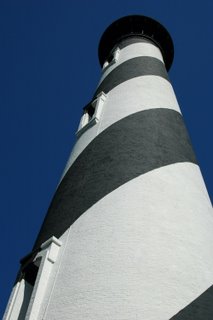
St. Augustine Florida Lighthouse


In 1823, a $5,000 government grant was established and the current limestone tower was converted by contractor Elias Wallen into Florida's first lighthouse by 1824.
During the Civil War, Confederate sympathizers removed the lens in St. Augustine's light tower. The tower was not re-lit again until 1867.
During the next 30 years, mariners constantly complained that the light tower did not provide the visibility they needed. After a series of fruitless corrective actions, coupled with the increasing threat of land erosion near the lighthouse, the lighthouse board provided new funds for a new lighthouse to be built in 1871.
Paul Petz, who designed the Library of Congress, undertook the building of this new lighthouse and created a 165-foot tower with a first-order Fresnel lens. The new lighthouse was completed in 1874.
In 1898, St. Augustine's lighthouse was used as a lookout tower in the Spanish-American War. The light keeper of St. Augustine's served as the lookout and had signal flags and a telephone line that ran to the customs house to send an alert if needed.
Likewise, the lighthouse had an involvement in both World Wars. It was dimmed in World War I so as not to aid German U-boats in finding American ships to sink.
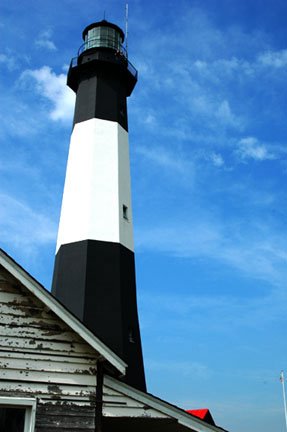
In World War II, the tower was used as a lookout as a team of light keepers worked around the clock from the top of the tower.

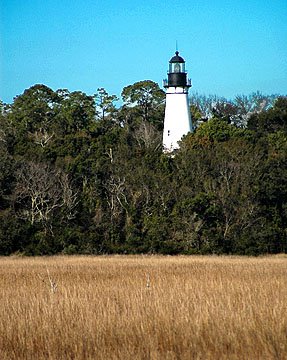
Amelia Island Lighthouse


Constructed in 1838. This is Florida's oldest lighthouse.

Tybee Island Lightstation


Ordered by General James Oglethorpe, Governor of the 13th colony, in 1732, the Tybee Island Light Station has been guiding mariners safe entrance into the Savannah River for over 270 years.

The Tybee Island Light Station is one of America's most intact lighthouse stations having all of its historic support buildings.

Rebuilt several times the current lightstation displays its 1916 day mark with 178 stairs and a First Order Fresnel lens (nine feet tall)

Monday, December 26, 2005

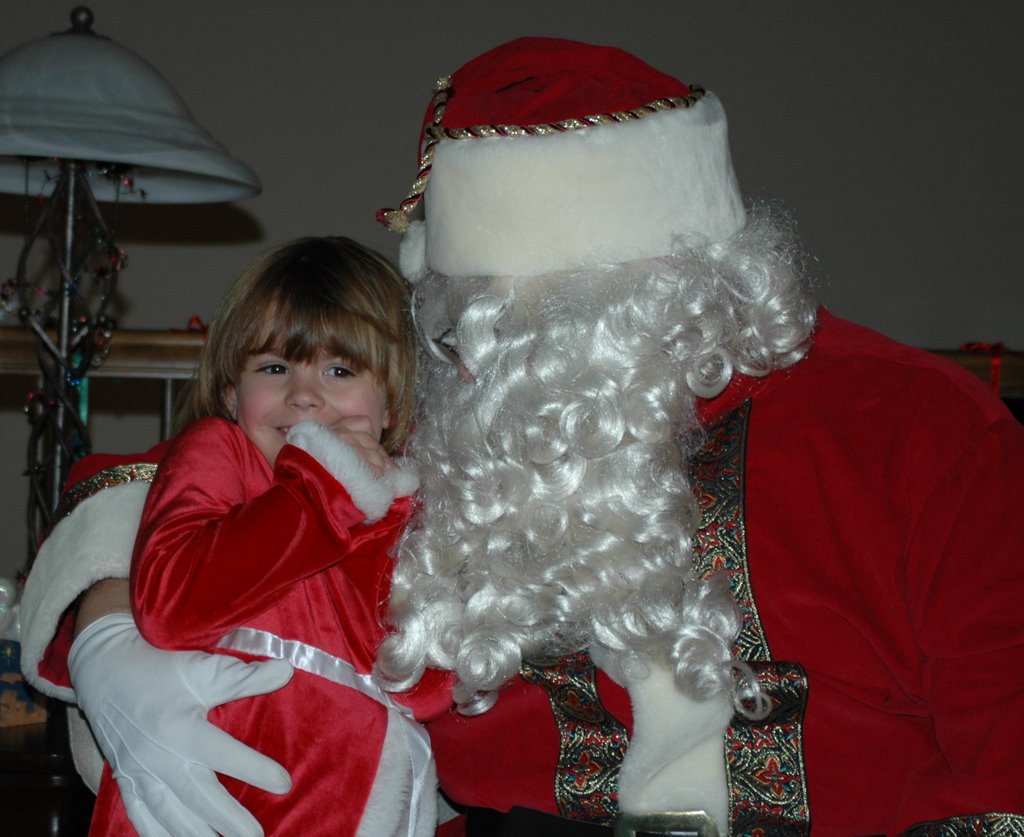
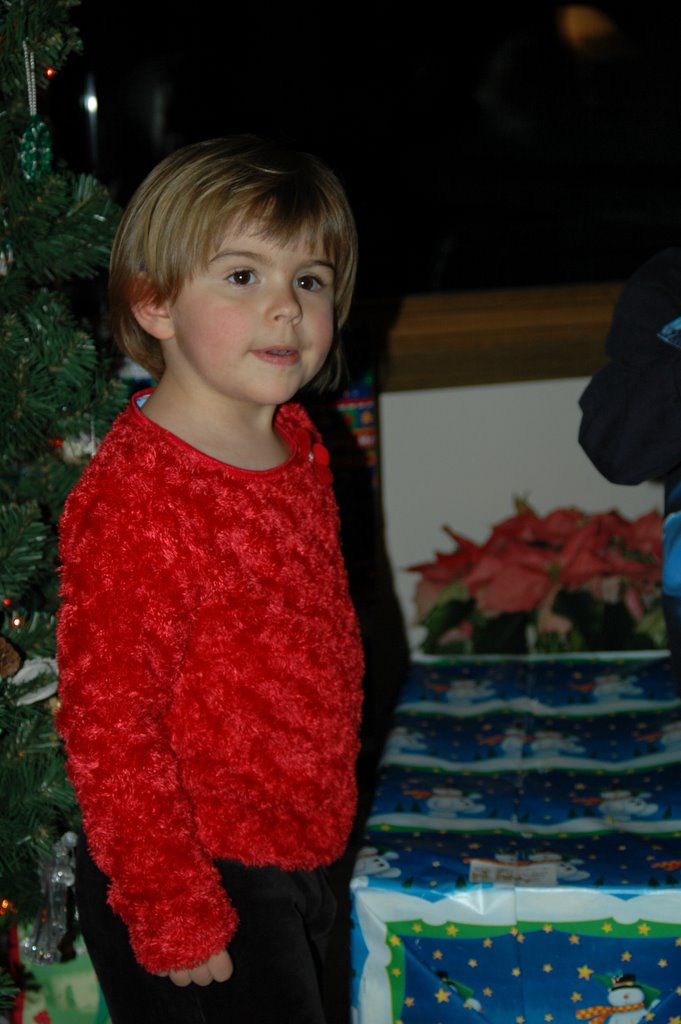
Christmas 2005 Max and Eryn


Christmas 2005


Its amazing what impact there is to being able to read your name before your 3.

Saturday, December 17, 2005

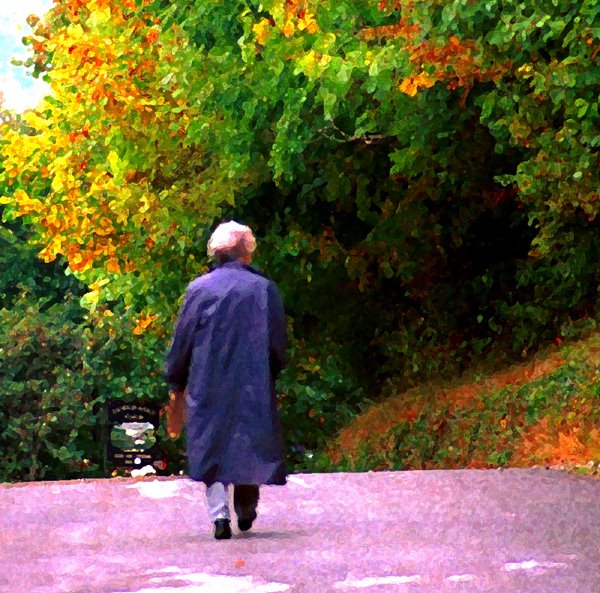
New Grange Farm

We saw this lady walking towards the New Grange Farm in Ireland, late september 2001.
Nikon N6006
ASA160 Pro
Photoshop altered

Monday, December 12, 2005

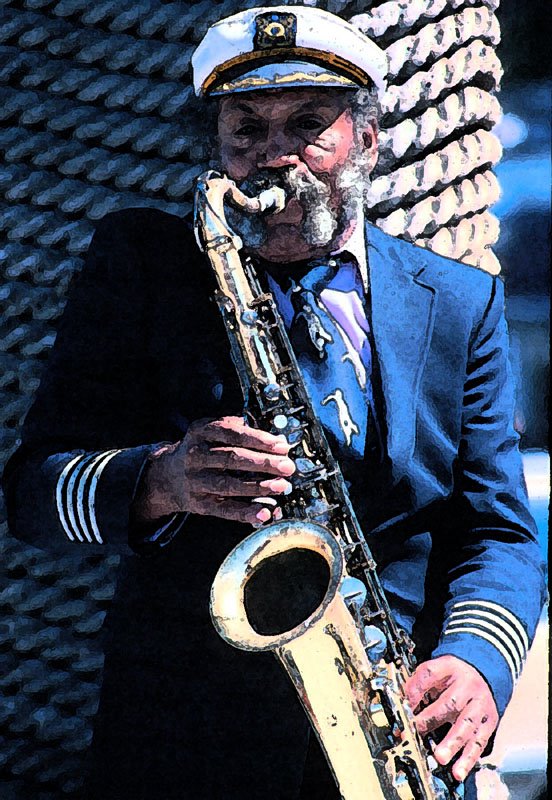
Street Performer series II


Sax player photographed in Spring of 1998 on Fisherman's Wharf San Fran

Nikon N6006 ASA64
altered in Photoshop

Street Performer series


Fiddler photographed the fall of 2003 in New York City's Clinton Fort Park.

Nikon N6006 ASA160
altered in Photoshop

Monday, November 07, 2005

Welcome to the Monkey House


The fun continues. Who the ( insert word here) knows what is going on between Guidant, JNJ, and Boston Scientific.

Sunday, October 30, 2005

Como Zoo Boo


Eryn in her monkey suit for Como Zoo Boo
10/29/2005